
Finding the right ceiling fan under ₹1,500 in India involves more than comparing prices. Look for a model that provides strong airflow, performs consistently during hot summer months, and consumes electricity efficiently.
With numerous budget-friendly options on the market, choosing a reliable fan can be challenging. Before buying, compare important factors such as motor durability, blade design, air delivery, power consumption, warranty, and after-sales service.
For a typical bedroom or a small living room, a 1200mm (48-inch) ceiling fan is generally a suitable choice, offering a good balance of airflow and room coverage. You should also compare the motor specifications and advertised air delivery instead of judging performance by rotational speed alone.Copper windings are often favoured for their excellent conductivity, but a fan’s lifespan also depends on motor construction and built-in protection against overheating.
This guide compares three affordable ceiling fans from Crompton, Bajaj, and Orient Electric. You’ll also learn which features to look for, how to keep your fan in good condition, and what performance and quality you can expect within a ₹1,500 budget.
Important Things to Check Before Purchasing a Ceiling Fan
Before purchasing a ceiling fan, review the essential specifications that affect its airflow, energy efficiency, durability, and overall performance.This information ensures your purchasing decision isn’t based purely on aesthetics or advertised RPMs.
1. Pay Attention to Motor Quality
A ceiling fan’s motor plays a major role in its long-term performance. Copper windings are widely used in quality motors because they conduct electricity efficiently.
A fan motor’s lifespan is influenced by several factors, not just the type of winding material it uses. Factors such as insulation quality, overheating protection, bearing construction, manufacturing standards, and warranty coverage also affect how long a fan lasts.
Check the official product specifications before purchasing to learn more about the motor’s design, materials, and build quality. Even fans in the same price range can differ in the quality of their internal components and overall build.
2. Check RPM Alongside Air Delivery
RPM stands for Revolutions Per Minute and indicates how quickly the blades rotate. A fan with a higher RPM may deliver a faster breeze, but its overall airflow also depends on blade design, pitch, and motor performance.
Airflow capacity is standardly quantified using cubic meters per minute, abbreviated as CMM. This specification indicates how much air a fan circulates under defined test conditions, making it easier to compare airflow performance across models.
When choosing a standard 1200mm ceiling fan, check both RPM and CMM to understand its speed and air delivery. The blade angle, shape, and overall construction also influence how effectively air circulates throughout the room.
3. Select the Correct Sweep Size
The sweep size indicates the diameter of the circle formed by a ceiling fan’s blades as they rotate.
A 1200mm ceiling fan is well suited to many Indian bedrooms and compact living rooms. The ideal fan size varies according to the room’s dimensions, ceiling height, furniture arrangement, and ventilation conditions.
For a compact room, one appropriately sized fan may be sufficient. Larger rooms may require a bigger sweep or more than one fan to distribute air comfortably.
4. Consider Electricity Consumption
If you use your ceiling fan for several hours every day, its wattage can affect your electricity bill.
Older ceiling fans may use more electricity than modern energy-saving models. Before buying, check the wattage mentioned on the product label, as the star rating alone may not give you a complete picture of its power consumption.
In areas with frequent power cuts, choosing a fan with lower wattage can reduce electricity usage and help your inverter run for a longer duration. The actual backup duration will depend on the battery capacity, inverter efficiency, battery condition, and other connected appliances.
Before making a purchase, check the latest BEE energy rating and confirm that the specific fan model meets the applicable efficiency standards.
Top Ceiling Fans Under ₹1500 in India
Explore these affordable ceiling fan options that offer practical features for everyday use. Since prices and product specifications can vary across retailers, check the latest information before completing your purchase.
1. Crompton SUREBREEZE HILLBRIZ 1200mm Ceiling Fan
 1200mm Ceiling Fan
Crompton SUREBREEZE HILLBRIZ 1200mm Ceiling Fan
- Sweep Size: 1200mm (48 inches)
- Motor: Designed for everyday cooling performance
- Air Delivery: Comfortable airflow for daily use
- Blade Design: Aerodynamic blades for effective air circulation
- Operation: Suitable for regular household use
- Design: Simple and elegant finish
- Installation: Suitable for bedrooms and living rooms
- Best For: Budget-conscious buyers looking for a standard 1200mm fan
Crompton is a familiar name in India’s electrical appliances market, with a range of ceiling fans for different budgets. The SUREBREEZE HILLBRIZ is an option to consider if you want a straightforward design for everyday household use.
Its simple, traditional design works well in bedrooms, compact living areas, and other rooms where reliable airflow matters more than an elaborate appearance. The brown finish can also complement traditional wooden furniture and darker interiors.
Key features to check:
- 1200mm sweep: A good fit for many regular-sized rooms, depending on the available space, ceiling height, and room arrangement.
- Simple appearance: The brown finish works well with a variety of home interiors.
- Everyday cooling: Compare the manufacturer’s stated air delivery and rotational speed before purchasing.
- Warranty and after-sales support: Review the warranty coverage and ensure that an authorised repair centre is accessible in your area.
- Motor details: Check the manufacturer’s website or product packaging for information about the winding material and bearing type.
Why consider it?
This model may suit buyers looking for a conventional ceiling fan from an established manufacturer. Before buying, make sure the latest version is priced below ₹1,500 and offers the features and airflow you need for your room.
2. Bajaj Frore 1200mm Ceiling Fan
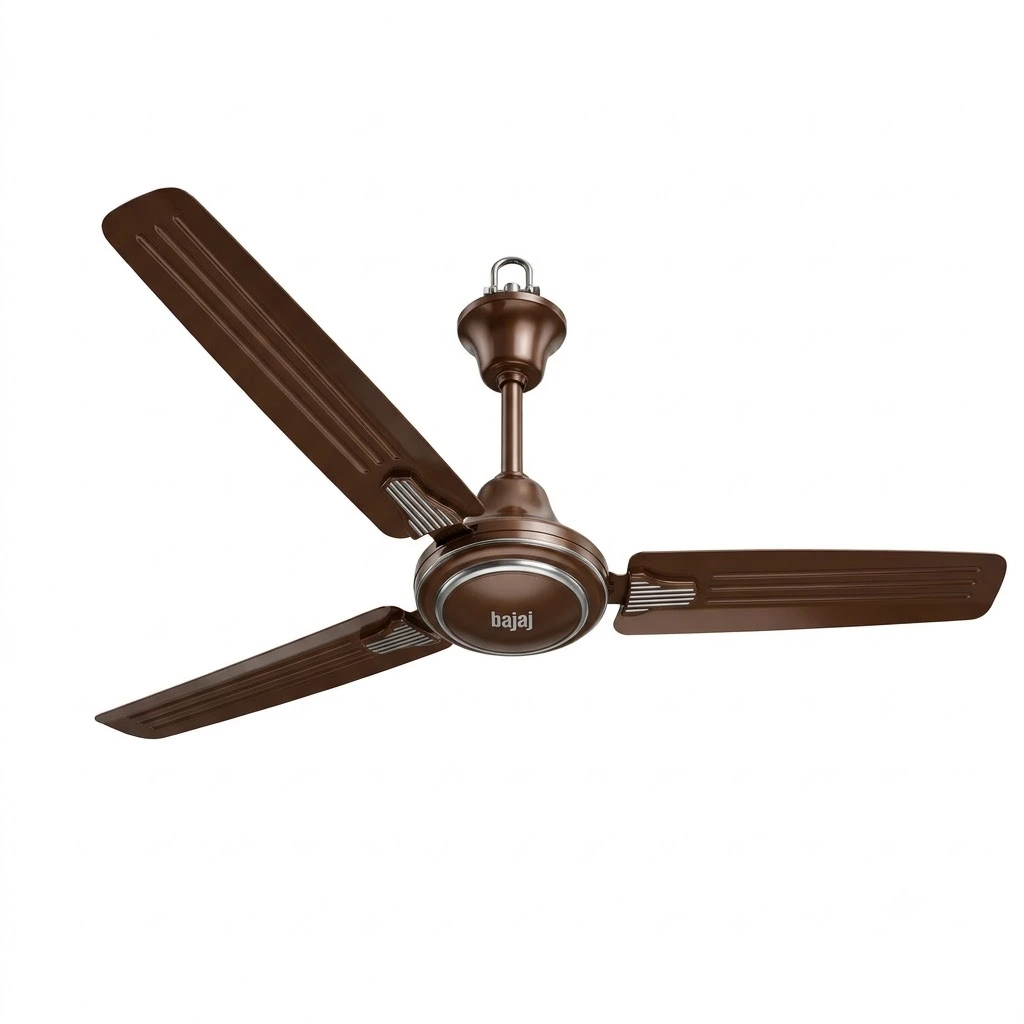 1200mm Ceiling Fan
Bajaj Frore 1200mm Ceiling Fan
- Sweep Size: 1200mm (48 inches)
- Motor: Designed for reliable everyday performance
- Air Delivery: Comfortable airflow for daily cooling
- Blade Design: Aerodynamic blades for better air circulation
- Speed: Suitable for regular household cooling needs
- Design: Simple and modern appearance
- Installation: Suitable for bedrooms, living rooms and indoor spaces
- Best For: Buyers looking for an affordable ceiling fan for everyday use
Bajaj Frore is another option to explore if you need a practical fan for regular use without spending heavily on decorative finishes or advanced features.
If your fan runs for much of the day, its electricity consumption is worth considering. Check the wattage listed for the specific Frore variant and compare it with other fans in the same price range to identify the more energy-efficient option.
Key features to compare:
- 1200mm sweep: A common size for bedrooms and compact living areas.
- Fan RPM: Refer to the official RPM rating to evaluate a fan’s rotation speed and make a more informed comparison between models.
3. Orient Electric Apex-FX Ceiling Fan
 1200mm Ceiling Fan
Orient Electric Apex-FX Ceiling Fan
- Sweep Size: 1200mm (48 inches), depending on the variant
- Motor: Designed for consistent everyday performance
- Air Delivery: Comfortable airflow for daily use
- Blade Design: Aerodynamic blades for effective air circulation
- Speed: Suitable for regular household cooling
- Design: Simple and stylish finish
- Installation: Ideal for bedrooms, living rooms and indoor spaces
- Best For: Buyers looking for a practical ceiling fan for everyday home use
Orient Electric has a diverse ceiling fan range to suit different budgets and household needs. The Apex-FX is another model to consider when comparing basic fans for everyday household cooling.
For everyday use, compare the motor quality, bearing construction, noise levels, and warranty coverage before selecting a ceiling fan. These factors are more useful for evaluating long-term ownership than appearance alone.
Key features to check:
- Classic appearance: A good option for households that favour a clean, understated ceiling fan design.
- Air delivery: Check the specified CMM and RPM ratings of the particular model to evaluate its airflow and rotational speed.
- Motor construction: Check the manufacturer’s published information rather than assuming a particular winding material.
- Appearance and upkeep: Pick a colour and finish that complement your room’s décor and are simple to keep clean.
- After-sales service: Review the warranty terms and locate an authorised service centre if necessary.
Why consider it?
The Orient Electric Apex-FX is worth considering if you’re looking for a budget ceiling fan from a recognised brand. Before purchasing, confirm its latest specifications, price, and availability.
How to Select the Best Ceiling Fan Under ₹1,500
A low price does not necessarily mean poor quality, just as a well-known brand does not guarantee that every model will suit your needs. Use the following factors to compare your shortlisted options.
1. Copper Windings and Motor Construction
Motor winding material is an important specification to investigate when comparing inexpensive ceiling fans.
Copper is widely used in electrical motors because it conducts electricity effectively. Some ceiling fan motors use aluminium windings instead, and their overall performance depends on the motor’s design, build quality, and manufacturing standards.
For a fair assessment of durability, consider the fan’s overall construction and motor quality instead of judging it solely by the winding material.
Before buying, check:
The stated winding material.
Motor insulation and thermal protection, where specified.
The bearing type and motor construction.
The manufacturer’s warranty and service conditions.
Repair and spare parts: Check whether genuine replacement components and authorised repair services are readily available.
A well-built ceiling fan with appropriate safety features and transparent warranty terms may offer better long-term value than an unfamiliar model with limited product information.
2. Understand RPM and CMM
RPM and air delivery are two key performance figures to check when comparing ceiling fan models.
RPM — Revolutions Per Minute
RPM indicates how many complete rotations the fan makes in one minute. A higher number indicates faster rotation, but the actual cooling experience also depends on blade geometry and the amount of air displaced.
CMM — Cubic Metres per Minute
CMM measures the amount of air a ceiling fan circulates in one minute. When the figures are measured under comparable conditions, this is useful for assessing the airflow performance of different fans.
For a 1200mm fan, compare both measurements before deciding which model is more suitable for your room.
Remember that the manufacturer’s figures should be checked against the exact product variant. Fans with similar price tags can differ considerably in the amount of air they circulate, so compare their stated air delivery ratings before buying.
3. Check Wattage and BEE Information
The Bureau of Energy Efficiency (BEE) provides energy-efficiency labelling for applicable appliances in India.
When comparing conventional ceiling fans, check the label’s star rating, rated power consumption, and applicable validity period. The star rating should be interpreted according to the relevant product category and labelling requirements.
A lower-wattage fan generally uses less electricity when operating under comparable conditions. However, you should also consider airflow, speed settings, and how long the fan will run each day.
How Much Power Does a Ceiling Fan Consume?
You can estimate consumption using this simple formula:
Units consumed = Power in watts × Hours of use ÷ 1,000
For example, a 60W fan running for 10 hours uses approximately 0.6 kWh, or 0.6 electricity units, per day.
At an illustrative electricity rate of ₹8 per unit, that works out to ₹4.80 per day. Your electricity charges will vary based on how much you pay per unit and how many hours you run the fan.
4. Are BLDC Fans Available Under ₹1500?
BLDC stands for Brushless Direct Current. These fans use an electronically controlled motor and are often designed to consume substantially less power than conventional induction-motor fans.
Certain BLDC ceiling fans also include handy features such as remote operation, adjustable speed levels, and additional comfort settings. However, prices vary by brand, model, and sale, so you should not assume that every BLDC fan costs the same amount.
If your budget is strictly ₹1500, your selection may be limited. If you operate a fan for many hours daily, compare the initial purchase price with the potential electricity savings before deciding whether to increase your budget.
Ceiling Fan Installation and Maintenance Tips
Even a good ceiling fan can become noisy or perform poorly if it is installed incorrectly or neglected. Following a few basic safety measures can help ensure your ceiling fan operates safely.
Hire a Qualified Electrician
A ceiling fan must be secured to a suitable ceiling support and connected correctly to the electrical supply. Get a trained electrician to install the fan, especially when the ceiling support, electrical connections, or mounting arrangements require inspection or repair.
Never rely on a decorative ceiling fitting or an unsuitable hook to support the fan’s weight.
Use a Compatible Regulator
Make sure the regulator is compatible with your fan’s motor and electrical design. Older regulators and newer electronic regulators may operate differently, so ask your electrician to recommend a suitable model.
Do not replace a regulator solely on the assumption that every electronic model will save the same amount of electricity. The result depends on the regulator’s design and the fan it controls.
Check for Wobbling and Unusual Noise
A correctly installed ceiling fan should run without excessive shaking. Turn off the fan and arrange for a professional inspection if you notice excessive shaking, clicking sounds, grinding noises, or unusual vibrations.
Loose fasteners, blade misalignment, mounting problems, or worn components can contribute to these symptoms. Do not attempt adjustments while the fan is running.
Clean the Blades Regularly
Dust accumulation can affect cleanliness and may contribute to imbalance if it builds up unevenly.
Turn off the power and wait until the blades come to a complete stop before cleaning the fan. Use a suitable cloth to remove dust from both sides of the blades, following the manufacturer’s maintenance instructions.
Avoid putting weight on the blades or bending them while cleaning. If the fan continues to vibrate after cleaning, have it checked by a qualified technician.
Limitations of Ceiling Fans Under ₹1500
Budget ceiling fans can meet everyday cooling needs, but you may need to compromise on certain features.
Limited Advanced Features
Most budget ceiling fans prioritise essential functionality, so features such as smart connectivity, remote control, built-in lights, and advanced operating modes may not be included. Check the included features if convenience is important to you.
Conventional Designs
At this price, you will generally find simpler finishes and traditional blade designs. Premium decorative elements and designer styling may be limited, although availability varies by seller.
Energy Efficiency May Vary
Budget ceiling fans can vary in both power consumption and airflow performance. Check each model’s rated wattage, air delivery figures, and BEE energy label to compare efficiency accurately rather than expecting every low-cost fan to perform alike.
Specifications and Prices Can Change
Manufacturers may update products, retailers may list different variants, and promotional prices can fluctuate. Before placing your order, confirm the exact model number, warranty coverage, motor details, and latest market price.
Final Verdict: Which Ceiling Fan Under ₹1500 Should You Buy?
The right choice depends on what matters most to you. If you want a simple fan for daily household use, compare the Crompton SUREBREEZE HILLBRIZ, Bajaj Frore, and Orient Electric Apex-FX using their verified specifications and current prices.
Crompton SUREBREEZE HILLBRIZ is worth considering if the available model fits your ₹1,500 budget and provides suitable air delivery and warranty coverage.
Compare Bajaj Frore if you want an affordable conventional fan and are particularly interested in its rated power consumption.
Look at Orient Electric Apex-FX if its current specifications, finish, and service support suit your household.
Before purchasing any of these models, confirm the exact sweep size, wattage, air delivery, winding material, warranty, and seller price. Avoid making a purchase decision based on motor or performance claims that cannot be confirmed through reliable product information.
Comparing models before purchasing can help you find a ceiling fan that delivers comfortable cooling while keeping both the initial cost and running expenses within your budget.
Frequently Asked Questions
1. Which ceiling fan brand offers the best value under ₹1,500 in India?
Crompton, Bajaj, and Orient Electric offer several affordable ceiling fan models for Indian households. Before buying, compare their airflow, power consumption, warranty, and service support to find the best option under ₹1,500. The best choice depends on the particular model’s performance, warranty, availability, and after-sales service in your area.
2. Is a copper motor necessary for a ceiling fan?
Copper windings offer good electrical conductivity and are commonly used in quality motors. However, motor design, insulation, thermal protection, manufacturing quality, and maintenance also influence reliability. Check the manufacturer’s specifications before buying.
3. What does a 1-star rating mean on a ceiling fan?
A 1-star rating indicates a fan’s energy-efficiency level under the applicable BEE standards.Check the appliance category and the label’s validity period to confirm the fan’s applicable energy-efficiency rating. Compare the actual wattage and label details when evaluating different fans.
4. What RPM is ideal for a ceiling fan?
There is no single RPM that guarantees the best cooling. Rotational speed should be considered alongside air delivery, blade design, sweep size, and room conditions. Check the manufacturer’s listed specifications before choosing a fan to ensure it meets your needs.
5. Which Ceiling Fan Size Works Best in a Bedroom?
A 1200mm (48-inch) fan is a common option for many standard Indian bedrooms. The right fan size depends on the room’s measurements, ceiling height, furniture layout, and airflow. For larger spaces, choose a fan with a broader sweep or use two fans to improve air circulation fan to improve airflow.
Read also: